Tuesday, September 1, 2020

How to use Task Cards in Your Classroom


Everyone mentions task cards and you see them ALL. THE. TIME. If you haven't jumped on the task card bandwagon, you should because they are awesome! Why? Because they are a review for the students that can go over a broad or specific topic. I love them because answer sheets and questions are already included so they can be taken for a daily grade. 


1. White board review  I absolutely LOVE using this throughout the day or the week. Even better, task cards are great to use with white boards. Students write their answer on the white board, then show it to the teacher at the same time. It gives you instant data on how many students know the answer and what they might still be missing. Check out my blog post on how to use whiteboards in your class!

ex:

(teacher) What are the 3 causes of the Civil War?

(students write the answer on the white board and show it to the teacher on the count of three)

as a teacher, I notice that the students know that two of the causes are slavery and states’ rights, but many of them are forgetting about sectionalism. I know that I need to review that more in depth with them

2. Stations there are two main ways to use task cards for stations. 
  • (one topic) put 3-5 task cards at each station and have students rotate throughout the stations in order to break up the monotony of doing all the task cards at once. It also helps students not feel overwhelmed having to complete all of them
  •  (2+ topics) separate the task cards by topic and set up the stations according to that topic.

ex: when reviewing science, you could put 3 space questions at a station and add images/paraphernalia from NASA. Another station on earthquakes could have pictures of the San Andreas fault in California or a video of the aftermath in Japan.

3. Quiz Quiz Trade With this activity, students are given one task card and must look up the answer before them begin. Students then go around the room and quiz another student and trade task cards when done. 

This is great for lower students because it makes them the “expert” with that task card. Students get to re-teach another student and helps students take ownership of the question/topic. You can also add an answer sheet for accountability. Great for the on-task class!


4. Scoot!  a more organized form of review. Each student has one task card. Each student also has an answer sheet. Everyone completes their own task card and write the answer down. After an allotted time (usually 1 minute), students pass the task card to the next person in their row. This is a great way to use task cards for the talkative classes or the classes with more behavior issues because everyone get the same amount of time, and there is less getting up/moving around. try to make it in a circle so the last student doesn’t have to run across the class to hand off the task card to the next person.

Check out the video below for an alternate way to play Scoot!


5. Back to Back  This is activity is a fan favorite because it gives students interaction. It's a  mix of scoot and QQT. Have students partner up and give them their answer sheet on a clip board. If you have a subject like math or science, add an extra piece of scratch paper to do any calculations on. Then, the students stand back to back, but where they can both see the screen at the same time. 

When you display the task card on the screen, the students have 30 seconds- 1 minutes to write their answer down on their answer sheet. when time is up, they turn and face their partner. then, they compare answers with their partners. This is great because it gives them a chance to work the problem out on their own before they discuss with their partner. It is also an easy way to collaborate and re-teach if needed. 

Bonus remediation (small group or one-on-one). after school tutorials, pick out 3 cards. the student picks 2 that they answer. continue until they have gone through all the cards. then, at the end, take the cards they didn’t answer and work with them on each task card one by one. this helps students filter out the material they know so you can pinpoint where they need help.


teacher using task cards with students


Tuesday, July 21, 2020

Building a Sense of Community in Your Middle School Classroom

INSTAGRAM AND INSTANT BONDING
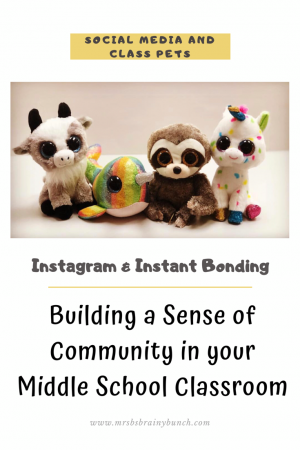
How an Instagram of four stuffed animals warmed the hearts of even my toughest 8th graders.

I am so excited to have a guest post this month from Robin of Mrs. B's Brainy Bunch! She is a fantastic ELA teacher from New England she is one of my favorite people. She has had great success using class pets in her classroom, so check out how she implements them with her students.

Instagram image of the class pets


THE INTRODUCTIONS


a long New England winter, and you get CLASS PETS. I can’t pinpoint the moment the idea came to me, but I vividly remember my husband’s reaction as I started ordering stuffed animals from Amazon. “Stuffed animals, for your 8th graders?” But my students are rarely surprised by my antics, and I knew they would be on board. Strengthening relationships among the various cliques in middle school is hard, but possible. Building a sense of community in my classroom is essential because when students feel like they belong, they learn!


IT ALL STARTED WITH FLAT STANLEY

I remember when my son was in the 2nd grade, and we received Flat Stanley in the mail from my nephew in Florida. For those of you who don’t know Flat Stanley, it’s a children’s book about a boy who is flattened by a bulletin board, and finds being flat brings endless possibilities. Our assignment was to show Flat Stanley around our Rhode Island town and take pictures of his adventures. When Stanley returned to Florida, he had been on a hayride in a pumpkin patch and out to dinner at our favorite Chinese restaurant. I hoped this cute childhood project would translate to my 13-year-old students. My mind began to race with all the adventures our class pets could go on with my 105 students!

SOCIAL MEDIA AS THE HOOK
Instagram image of the narwhal

Instagram image of the goat


When it comes to social media, I’m what my students call “old school”. I use Facebook to keep in touch with family and childhood friends, but that’s about it. And as my students love to point out, only “old” people use Facebook. I knew Instagram would be the perfect place to share our photos, so I’d need to learn how to use it. Even though my knowledge of Instagram was sparse, I could take a good photo and use filters… so the pets had their first photo shoot.


OUR FRIENDS NEEDED NAMES

The students arrived Monday morning to the plush faces of the Class Pets. I explained that wherever they took the pets, if they sent me pictures of their adventures, I’d post them to our Instagram page. For safety reasons, the only rule was there couldn’t be any people in any of the pictures. But before the pets could leave school on their first adventures, they needed names. I sent the students a Google form (attached for you to make your own) with pictures of each pet and they began listing possible names. When the votes were tallied, these were the names selected.

Instagram image of the pets


Aidan was named after a favorite student on the team who was lovingly called The Goat. Flash was the perfect name for the sloth as we were studying irony, and Bubbles and Sprinkles rounded out the foursome. I didn’t know the ins and outs of Instagram; however, I stood in front of 105 young adults who did! They taught me how to swipe up, left, and right, as well as post Instagram Stories.

NEW ENGLAND SPORTS FANS

My students began bringing the pets to all of their sporting events. They became mascots for every soccer, softball, basketball, and hockey team, and even their teammates from other schools began following the pets on Instagram. Each of the pets was invited to a Super Bowl Party and cheered on Tom Brady and The Patriots as they won their 6th Super Bowl.

Instagram image of the goat
******
Instagram image of the sloth

DISCOVERING SOMETHING NEW

The pets made the rounds participating in the students’ hobbies from playing chess to drama club to learning the violin, drums, and piano. They learned to play cards, cook, and do ballet. And on one especially cold night, Bubbles was given a sweater just his size. As the pets learned how to play Minecraft and Fortnite, the conversations among the different groups of gamers began. Which was better: PS4, XBOX or PC? Before I knew it, they were exchanging gamer tags to play together after school.

Instagram image of the goat
******
Instagram image of the narwhal


SHOWING THEIR CREATIVITY

I knew my students were imaginative, but I wasn’t prepared for the student who was doing her homework on The American Revolution to have Bubbles battle the Red Coats. Bubbles was an immediate favorite as students used his tusk to play ping pong, fence, and sing along to “The Narwhal Song”.

Instagram image of the narwhal
*****
Instagram image of the narwhal


THE UNEXPECTED

Each week I saw the followers on Instagram grow as the pets made their way into the lives of my students. The pets attended birthday parties, movies, and the theater, but I was not expecting the students’ parents and siblings to follow as well. One morning a student left Flash in the car, and her mother brought him to her job as a financial planner… and sent me pictures to post. Another week I got an email from a parent asking if Flash could come home with her son that weekend because they had a lot of fun activities planned for St. Joseph’s Day. This little community far exceeded the walls of Room 210.

Instagram image of the sloth
*****
Instagram image of the sloth

#BRINGBUBBLESHOME
Instagram image of the narwhal

The pets traveled all over the country from vacations to Kentucky and Florida to soccer tournaments in New Hampshire and Cape Cod. They even accompanied the returning RI State Science Olympiad Team to nationals in Cornell, NY. So, it was not a surprise when one went missing, but it warmed my heart to see the students sharing an assortment of hashtags about Bubbles disappearance.


Come spring, a new friend came to town. He was Gothic in nature, and the students decided on the name Midnight. Thankfully, Bubbles was found under a student’s bed by their cleaning lady. What I thought would be a fun weekend activity began to work its way into my class. Students began grabbing the pets during a test or a particularly tough day. They would even face the pets towards the TV during a movie so they could watch too. I feared the pets might only appeal to the girls on my team, but it was the boys who showed the most heart. As the year came to a close, I had to decide what to do with the pets. Although I posted the pictures to my Instagram page, these were not my pets.


Image of a dragon
*****

Image of a dragon


FINDING NEW HOMES

In the end, the pets were adopted by deserving students. The final Instagram post read:
The pets belong to the class of 2023, so it’s only right that they follow you to the high school. If you think you can give one of the pets a good home, send me a message with the pet you would like to adopt, and why you think you can give it a good home.

The applications were as sweet as their tender hearts. “I think my home would be a good home for Bubbles because she will always be busy with my little sister, and she will always be loved unconditionally.”


Another application read, “I believe I could provide Flash a good home because I have many stuffed animals he can become friends with, and everyone in my house will enjoy Flash very much.”


SENSE OF COMMUNITY

To say the students had fun with the Class Pets is an understatement. And as teachers know, kids learn better when they’re having fun. Middle school is a turbulent time for most teenagers, and they are craving a place where they belong. When students share their love of Dungeons and Dragons and old school New Kids on the Block, it’s because they feel comfortable being themselves. When students feel safe, they are more willing to take chances: raising their hands, sharing their ideas, reading a new book, writing a poem, DREAMING BIG

Community happens when you feel like people see you, hear you, and accept you for your unique ideas and quirky ways. I feel that in my classroom everyday, and so I know more silly and creative ideas lie ahead. Years from now, my students may not remember the correct use of a semicolon or how to correctly cite in MLA format, but as the old adage goes, they’ll remember how they felt in my classroom. And in my book, that’s a success!


EVERYTHING TO GET YOU STARTED WITH YOUR OWN CLASS PETS!

The Letter to Parents is completely editable so you can make it your own. You can decide how best you want the pictures sent to you be it school email or DM on Instagram . . . or both.
Naming the Pets is a Google Form that will make it easier for you to have the students name the pets. Simply swap the pictures and you are ready to go.
Request for Adoption is also a Google Form that will make it easier for you when the school year ends, and the pets are adopted by your students. Again, swap the picture and you are ready to go.

#CLASSPETCONNECTIONS
Due to the warm response of my blog post, I created a hashtag for teachers where we can share our favorite pet photos with fellow teachers around the world. When you post your photos on Instagram, use the #classpetconnections so we can see all the big and small adventures in which the pets embark. Happy Trails!

ACTIVITIES FOR YOUR STUDENTS AND CLASS PETS


If you are incorporating Class Pets into your classroom, these 12 MONTHLY ACTIVITIES are for you. These engaging activities help the students express themselves in new and creative ways.


Pinterest Pin of the class pets


Sunday, June 21, 2020

5 sure fire ways to have a stellar classroom observation


teacher in classroom


Few things in life are certain, but in the world of teaching there is one guarantee: observations. Formal classroom observations can be daunting for everyone involved. You may find yourself planning and re-planning for all the ‘what-if’ scenarios your mind can drum up with all roads leading to confusion. It doesn’t have to be this way! While you may be wondering why we need our classroom to be observed, there are sure fire ways to have a stellar classroom observation true tips for giving yourself your best chance for success.
Teacher showing students how to complete activity


Tip 1: Have a clean beginning and ending
Something you want to be sure you demonstrate to administration is clear concise sequences in lessons. The clean beginning and ending is a major part of that. It doesn’t hurt that these activities serve a dual purpose too! For a beginning, a set activity like a warmup or bell ringer gives students the opportunity to jump start their focus. At the same time, it gives you, the educator, time for administrative duties like collecting homework and submitting attendance.

A great way to wrap up a lesson is with exit tickets! It not only shows administration that you have a clear ending for class, but afterwards you’ll be able to assess student learning needs to make the necessary adjustments. If songs or mnemonic devices are more your speed, this is also a great option which helps students retain information.


Tip 2: Have two to three student collaborations during class
Student collaboration is a great solution for those awkward pauses during instruction. Using the think-pair-share format, students are able to share ideas and work together to understand the material better. When the time comes for sharing out, students are often more apt to speak up. Without the pressure of having to share ideas they came up with alone, they feel empowered to participate!

The sweet spot for classroom collaboration is two to three times. This way, students still get the opportunity to collaborate, but not enough to encourage too excessive chatter, you get off topic or loss of your pacing.

iPad with preview of the Observation Checklist Freebie


Tip 3: Perform a classroom temperature check at least twice during the lesson
Temperature checks just means make sure all of your students understand the material. Some teachers prefer to ask a question to the whole class then call on a specific student that knows the answer to show the class is learning. This works up to a point.

Usually, though, administration wants to know that everyone in the class is learning. What I like to do is have students use whiteboards. By posing a question to the entire class, they can somewhat anonymously answer the question by showing the answer only to you, the teacher. This really clears up any confusion about who understands the material and who needs further reinforcement. This method also assures that all students participate and be honest about where they’re at with the material.

I highly recommend this method, but a word of caution, don’t wait to use white boards for the first time on the day of your observation. Make sure this method is a part of classroom culture beforehand! You don’t want to wait until the day (or the week) of your formal classroom observation to implement this.


Tip 4: Always give students an opportunity to work independently
Quiet, independent work is helpful in seeing who is struggling and who may need remediation. A simple way to lead into independent work is by surprisingly through classroom collaboration. Allow students to work with a shoulder partner and depending on the group, they may also be able to pick their team partner. Once partners are selected, have them work with someone for a timed, five-minute period. After the five minutes is up, students should return to their seats and work individually. This is good for a few reasons.

students are collaborating on an activity


Tip #5: Check in with Students Individually
During this time, you can circulate, talk to them, look at their work, ask clarifying questions and make sure they understand. Many students absorb information better during collaboration, but application comes during independent work, particularly with exit tickets. These quick assessments allow students to process the information and allow you to see what adjustments to make to your teaching.


Do you feel ready for the next time your administrator comes by your room? Your students are going to benefit greatly from these improvements. For more tips, follow me on social media. If you want to save some time, check out my formal observation form freebie!


If you are wondering what to expect from your principal, click here for a behind the scenes look.  Or, for more project-based learning in your class, check out these tips from Edutopia.

5 surefire ways to have a stellar classroom observation


Thursday, May 21, 2020

Whiteboards - It's Easy to Do if You Do It Smart


white board on a student desk


Whiteboards in the classroom are so underrated. They are a fantastic way to make sure students understand the material being covered. This subtle classroom management tool helps curb off-topic conversations among students all while giving you insight on where to strengthen instruction. Whiteboards also come with a host of other benefits.

They often help:
 shy students be vocal and get participation points without having to raise their hand and speak.
 students who might be struggling to feel empowered. They can participate without the fear of feeling less smart than their classmates who know the answers.
 students who always know the answers can participate without becoming the loudest voices in the class.


Picture of dry erase markers in multiple colors
I 💓 chisel tip markers!


With the benefits in mind, you can make a sound decision on if it is for you and your students and how you would like to implement the practice. This includes what type of board you want for your classes. Be sure to select your board on criteria of cost and durability.


Your whiteboard options:
  • Dollar stores - If you are worried about the affordability of a class set, check local dollar stores and value shopping centers for low-cost options. While materials may not be bundled, it is possible to get a class set for $30 or less!
  • Teacher Supply Store - If dollar stores is not an option for you, another cost-effective option is card stock covered in 5mm laminate. For around$10, a class set can be made at local office or teacher supply stores. After the actual dry erase board, this is the sturdiest alternative. 
  • Page protectors - If you find yourself pressed for time and restricted by budget, you can always use printer paper inside of page protectors. This option isn’t as durable or mess free, but it gets the job done.

picture of a whiteboard with markers


Once you’ve selected your preferred whiteboard, it is time to establish guidelines of using whiteboards in class.


Some sample guidelines include:

 Whiteboards are only to be used for writing answers to the questions being asked. Only write on them when asked to or with permission.
 Dry erase markers are only for use on dry erase surfaces, not hands, books or paper.
 Everyone should try to answer the question with a response related to the subject. It’s okay to be unsure or incorrect, but an educated attempt is required.
 Once an answer is written, leave the whiteboard face down on the desk until instructed otherwise.

I highly recommend posting the guidelines in plain sight. This is great for you, those students that may have a hard time remembering and those that are visual learners. Using whiteboards with guidelines can be a little cumbersome in the beginning, but eventually, it becomes a part of the classroom culture.

Now that you’ve set up your guidelines, it is time to actually use the whiteboards.

5 Easy Steps to Using Whiteboard in Class

1. Have students set whiteboards face up with the markers on the desks while you ask the selected question. Once the question is asked, have them think about it for twenty seconds, enough time to think about the question and process it, then pick up the markers to respond. After students have written their answer, they are to put the whiteboards face down.


2. Have students show you their whiteboards when they’re done. This performs the temperature check and you can see who may not be connecting with the material.

3. After seeing all responses, have students return their board to face down and discuss their answers with a partner. If there is any confusion, this is a low-pressure opportunity to receive peer feedback without being called out in class. This is also when students are allowed to change answers. 


4. When partner collaboration is complete, ask one student to share their now correct answer and explain it. Those students that changed their answer will now have an opportunity to explain the correct answer which helps them retain the information.


5. Repeat! Walk through this process for two or three questions then move on with the main activity.


Using whiteboards is amazingly simple, but highly effective. Once incorporated into the fabric of the classroom, you’ll have the freedom to use this tool as a part of regular instruction and special occasions, like classroom observation.

How excited are you to try out these ideas? Your students are going to love using this in class, and I would love to see how you use this idea. Leave a comment below if you've tried this out or how you plan on using them 👍

Person writing on white board in a classroom


If you are looking for some great tips on using whiteboards in elementary grades, check out this great list!

Want more info on whiteboards being used in class? Check out this fantastic list of resources.

Friday, July 26, 2019

5 ways teachers can have a great first day of school


school supplies for the first day of school

Making back to school less stressful


On a scale of 1 to 5, how ready are you for the first day of school? Are you still in denial that everyone is buying supplies for back to school? Whether you are ready or not, the first day of school is right around the corner. But, it doesn’t have to be stressful! If you can get these 5 things ready, you will be ready to greet the students in no time at all.


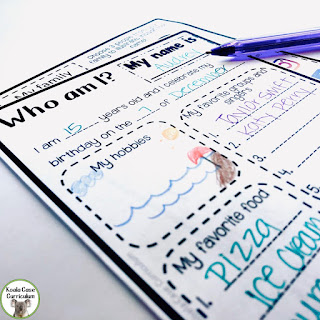
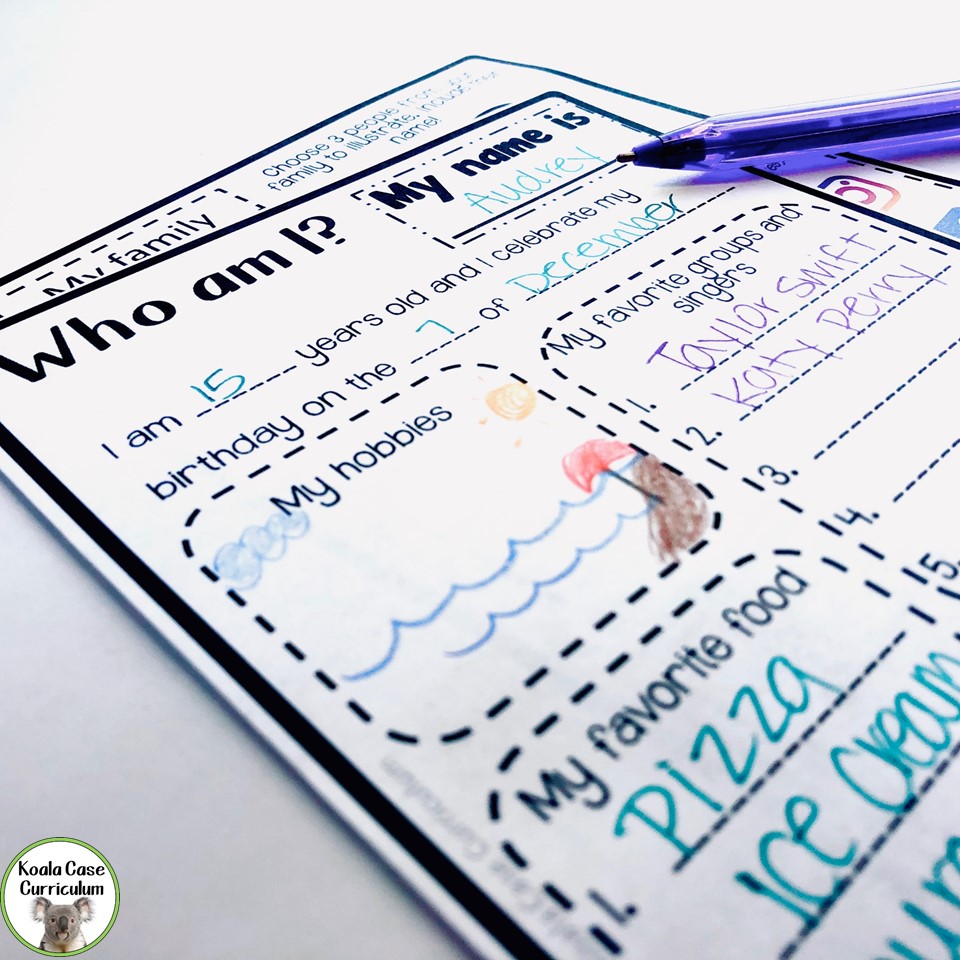
#1 - you HAVE to get to know your students. You’ll be able to help your students so much more without even spending a dime. On the first day, have an “all about me” activity for the students to fill out. 

It’s great for three reasons:
1) it gives them something to work on while you check attendance and schedules;
2) it saves students the embarrassment of having to stand up and say something about themselves. And
3) you get to know so much more about them when you have it down on paper! In three months, you probably won’t remember what they said about their favorite food or what music they like to listen to. It’s a great way to get to know more about your students once you learned their names.

students get to know each other during the first week of school with bingo cards

#2 - Let your students get to know each other. Building relationships in class isn’t just for the teacher and students. Students need to get to know each other. Have you ever had students who struggled with material, and no matter how many different ways you tried to explain it? What about students who don’t get along and seem to argue over every little thing? A lot of that can be fixed before it even starts if the students feel like they are a team. They will want to help each other out when someone doesn’t understand the material, and the sometimes even go as far as to hold each other accountable when it comes to behavior.

students get to know each other during the first week of school with bingo cards


Have you ever worked a job where it seems like there were no rules? Employees came in whenever they pleased. If someone acted unprofessionally, they weren’t reprimanded, and the boss would impose rules as they saw fit. I bet you were mentally exhausted every day at that job because you didn’t know what to expect and whose rules to follow. It’s the same with students!

#3 - You have to set the guidelines and expectations for the classroom in order for it to run as smooth as possible. And remember consistency is the key! You don’t want students acting out because you enforced the rule for them but not someone else. It might take a full six weeks for students to catch on to the guidelines and expectations, but when they do, your life will be (somewhat) less stressful.


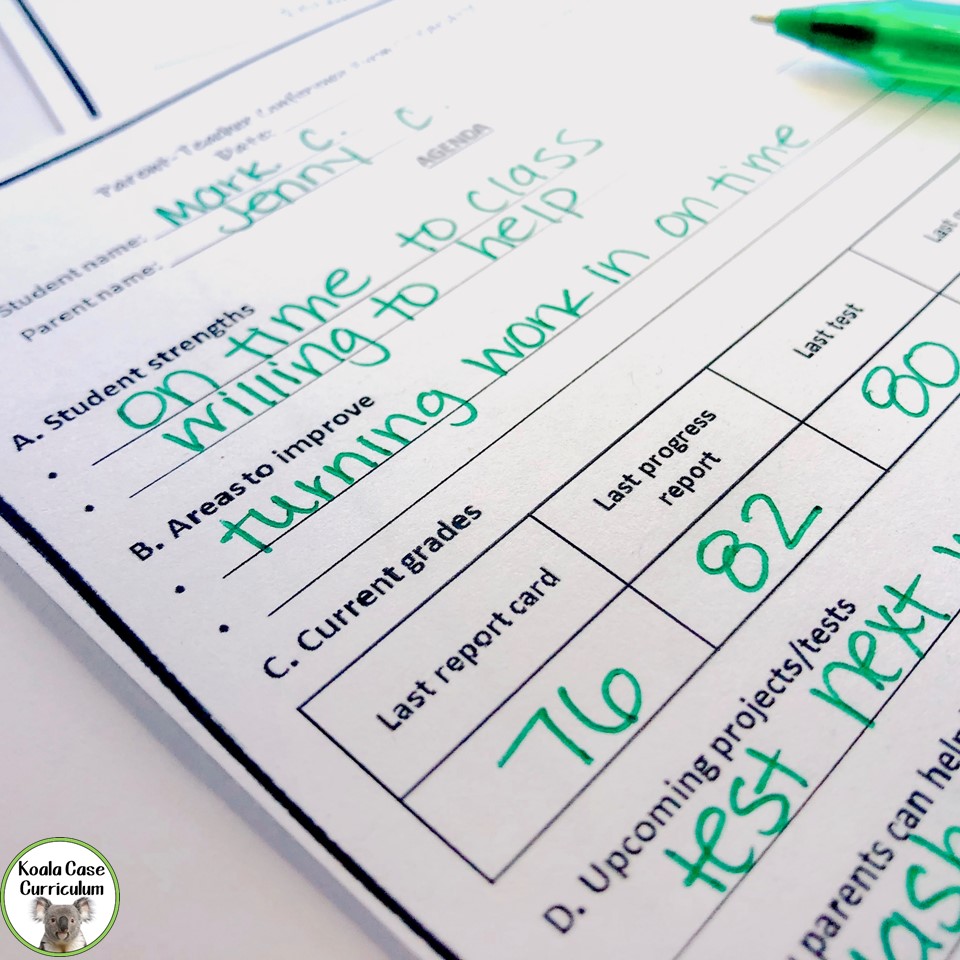
#4 - You didn’t forget about parent/teacher conferences, did you? Whether you are an experienced teacher or a newbie, getting ready for a parent/teacher conference can be overwhelming. You are never sure how it will go, and you aren’t always sure how to communicate to parents the not-so-nice things that they need to know. The best way to combat all of this is to have a parent/teacher conference agenda. I like to put mine on a handout that I can give to parents so they can fill out the info as we go along. Also, having an agenda set will keep the parents on track and prevent the conference from turning into an hour-long complaint-fest. Of course, you want to allot time for the parents to address their concerns but leave it towards the end so if gives you a chance to proactively answer any questions they have.

parent - teacher conferences are less stressful with these student information sheets


#5 - Have you ever had perfect attendance at work? If you are like me, I’m sure you will have to call in sick at some point. Sometimes you know ahead of time when you will be out, but a lot of times you don’t know until the flu hits you at midnight (kids and their germs!) So why not go ahead and get your substitute binder ready now instead of when you have a fever and trying to call in a sub? Some of the things you want to include are
  • a list of your procedures. You spent all this time getting your students accustomed to your procedures. Don’t let them all fly out the window the day you aren’t there
  • a class schedule. The sub needs to know when class begins and ends, and most importantly, when to eat lunch.
  • class descriptions (and the responsible students). Is your first class of the day still sleepy and therefore pretty compliant? Is your last class mostly boys who just came from gym class and VERY rowdy? Be nice to the sub and give them a heads up on what to expect. and while you’re at it, give them the names of 2-3 responsible students in case anything happens.


If you take the time to organize these activities and supplies, you will be setting yourself up for a fantastic year! If you are a history teacher looking for a ready-to-use items to get you ready for the year, check out my Back to School Activities pack. This first week starter pack will help you learn about your students while they learn about how your classroom operates.
The activities included are:
  • SLANT poster
  • Who am I? student information sheet
  • Icebreakers (2 different activities! Students BINGO and I have/who has?)
  • Class procedures PowerPoint (EDITABLE!)
  • test corrections
  • Parent/Teacher Conference sheets
  • 50 state banners (includes the motto, an outline of the state, and the date and order in which it was admitted to the union)
  • Open House PowerPoint (2 EDITABLE versions!)
  • Open House sign-in sheet (English and Spanish)


Summarizing Like a Boss: Five Strategies to Up Your Game

  Attention teachers! Do you find yourself receiving long-winded paragraph answers from your students that seem to go nowhere? Does it seem ...